
Running a Sex Offender Check in Marion County
The official starting point is the SLED State Sex Offender Registry gateway. South Carolina's tool is called SORT. SLED operates it with county sheriffs, and the service is a no-charge application provided through the U.S. Department of Justice. For Marion County, SORT is the direct state layer for a name search, a residence-based view, or public notifications. The Marion County Sheriff's Office remains the local contact for registration questions that the public screen cannot answer.
Bring a well-checked name and, when known, a date of birth or alias. Use the geographic route when the question concerns a street or nearby area. Then compare the full profile rather than relying on a pin alone. A map point shows the residence address on file. It does not show where a person is at a given moment, and it does not state that every person near a pin faces the same risk. SORT also warns that data changes fast and may await local verification.
For a clear view of the state entry page, the SLED registry guidance page shows the official path into SORT and its removal materials.
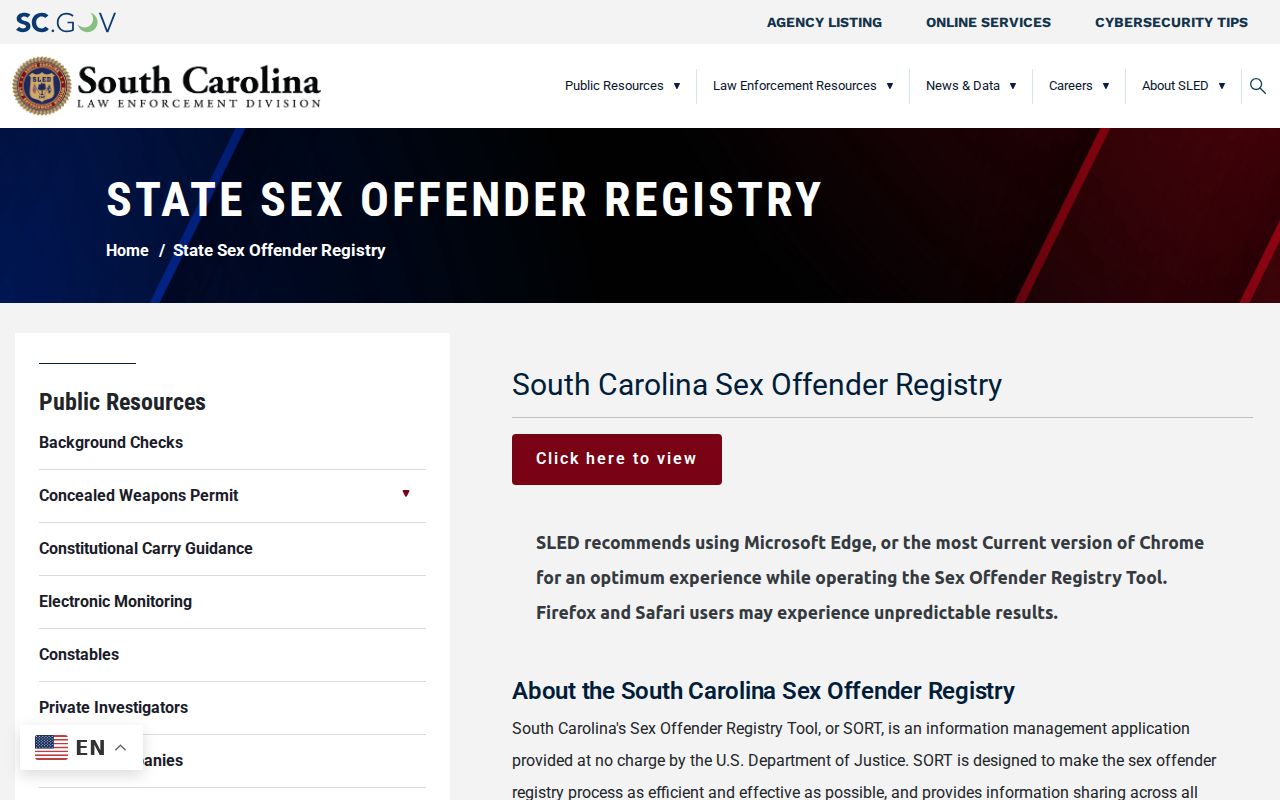
That state gateway is also the right place to confirm new registry guidance before relying on an older summary.
What Marion County SORT Results Mean
SORT includes a person because a conviction and South Carolina law require registration. Inclusion is not a separate SLED finding about current danger. That distinction matters when Marion County residents use the registry for family safety or neighborhood awareness. The result should prompt careful review of the offense, conviction date, photo, aliases, and address on file. It should not be turned into a claim that the registry itself does not make.
Conditions of use explain another limit. Some information is supplied by the registrant and can change before it is verified. An address, photo, or other identifying detail may therefore lag a recent update. If a Marion County entry appears wrong, note the profile facts and contact the SLED Sex Offender Registry Unit or the Marion County Sheriff's Office. Do not try to correct the matter through social posts or direct confrontation.
Note: A SORT result confirms statutory registration status, not a prediction of future conduct or a complete account of every court record.
Searching the South Carolina Sex Offender Registry Tool
SORT places conditions and a CAPTCHA before the active search. Those controls should be used as presented. The research capture verified the routes shown before the protected interface, but it did not bypass the CAPTCHA to claim exact fields or radius choices. A careful Marion County search follows the available labels and avoids guessing at controls that may change.
- Open the SLED registry gateway, enter SORT, and read the conditions of use before accepting them.
- Complete the CAPTCHA, then choose Geographic Search or Name Search for the Marion County question at hand.
- Review the result list and compare the name, aliases, date of birth, photograph, and location facts before selecting a profile.
- Open the full public profile, note its current details, and contact the responsible agency when a fact needs verification.
The verified pre-search navigation gives Marion County readers three practical routes:
| Verified Route | Use | Access Note |
|---|---|---|
| Name Search | Find a known person and compare identifying facts | Conditions acceptance and CAPTCHA come first |
| Geographic Search | Review registered residences in a Marion County area | SORT provides a visual residence map |
| Community Notifications | Register for public registry updates | Requires separate registration and agreement terms |
Renew Marion County Registry Notifications
South Carolina tells users of the prior notification system to register again. An old subscription should not be treated as active after the platform change. From SORT, accept the conditions, pass the CAPTCHA, select Community Notifications, enter the requested registration details, and accept the agreement terms. This creates the current notification route for Marion County rather than relying on a stale account.
Notifications supplement a direct search. They do not freeze registry data or replace a fresh profile review. A Marion County household can use alerts to learn of changes and then return to the official profile for context. SLED's public gateway also lists FAQs, resources, contact information, and removal material, so use that source when a notice raises a question about the meaning of a field.
What a Registry Profile Shows
South Carolina Code Section 23-3-490 defines the public registry information. A Marion County profile can connect identity facts with the qualifying conviction and current photo. The public fields verified in the law and official guidance are narrower than some commercial summaries. Vehicle, tattoo, employer, and school fields were not verified as public on the current interface, so they should not be assumed.
| Full Name and Aliases | The reported name and other names tied to the registrant. |
|---|---|
| Physical Details | Identifying physical characteristics and date of birth. |
| Current Photograph | The current public image, with multiple photographs over time available through SORT guidance. |
| Home Address on File | The registered residence used for the Marion County geographic display. |
| Qualifying Offense | The sex-related conviction that creates the registration duty. |
| Conviction Facts | The conviction date, city, and state associated with that offense. |
A field should be read in its own frame. The conviction field describes the offense that triggered registration. The address field describes the home address on file. Neither one supplies the full criminal case file or a current finding of dangerousness. For broader Marion County record paths, the county criminal history overview separates court, booking, repository, and registry sources.
Marion County SORT Versus NSOPW
SORT is the best state-specific layer for Marion County. The National Sex Offender Public Website, or NSOPW, adds a cross-state search maintained by the U.S. Department of Justice. Use it when a name or location question crosses South Carolina's border. SORT feeds national updates, yet each participating jurisdiction remains responsible for the data it provides.
The national interface is useful enough to deserve a separate check, and the official NSOPW search page shows the federal entry point.
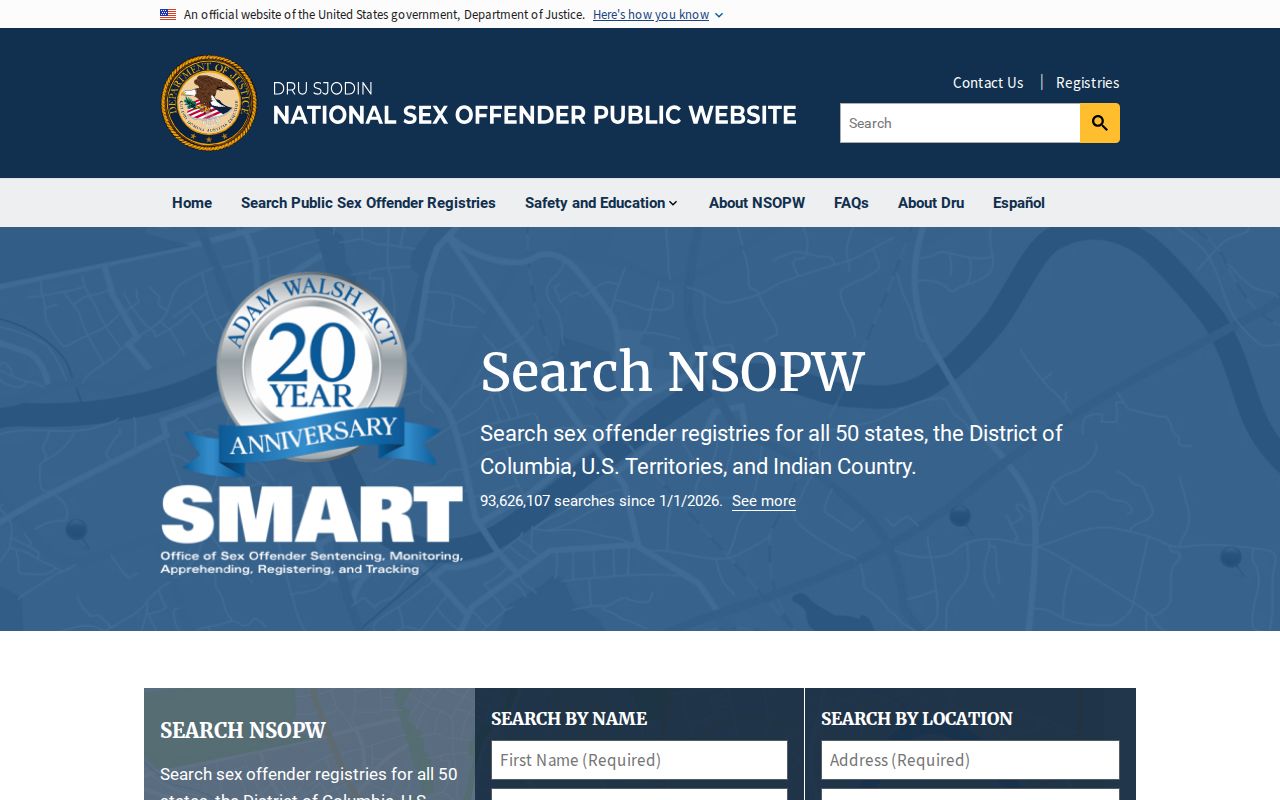
This cross-state layer broadens the search, while the South Carolina profile and Marion County contacts remain the best sources for local follow-up.
Registration Requirements and Levels in South Carolina
South Carolina uses Tier I, Tier II, and Tier III. Each tier carries lifetime registration unless relief is granted. The dates below are not automatic end points. They are the earliest verified points at which a qualifying person may use the stated removal route. The highest tier controls when more than one registry conviction is involved, and an out-of-state or federal conviction uses the equivalent federal SORNA tier.
| State Tier | Baseline Duty | Earliest Verified Relief Route | Public Reach |
|---|---|---|---|
| Tier I | Lifetime, subject to relief | SLED administrative request after 15 years under the statutory measure | Adult registrants are public |
| Tier II | Lifetime, subject to relief | SLED administrative request after 25 years | Adult registrants are public |
| Tier III | Lifetime, subject to relief | General Sessions motion after 30 years, not a SLED administrative request | Adults and juvenile Tier III registrants are public |
Other juvenile registry information is limited to law enforcement and defined notification or request recipients. A sheriff must notify school principals and daycare administrators when an offender address falls within one-half mile under the applicable law. Marion County counter hours, appointment rules, and local fees were not published in the reviewed sources. Call the sheriff before a registration visit.
Marion County Registry Removal Route
The administrative packet goes to the SLED SOR Unit, not to an online Marion County search. It requires a paper application, two recent FD-258 fingerprint sets, a $250 nonrefundable cashier's check or money order payable to SLED, sentencing and disposition records for every registry conviction, and proof of completed required treatment. The mailing address is Application for Sex Offender Registry Removal, SLED SOR Unit, PO Box 21398, Columbia, SC 29221.
An applicant must keep registering until written approval arrives. The person must have no failure-to-register conviction in the prior ten years and no added sexual offense after placement. SLED notifies the original prosecution and acts within 120 days after a complete request. A denial allows another administrative request no sooner than five years. There is no appeal inside SLED; a court challenge goes to General Sessions. Tier III relief uses the court route after 30 years.
Note: The 15, 25, and 30-year marks open possible relief routes; they never remove a Marion County profile by themselves.
Verify a Marion County Registry Entry
The Marion County Sheriff's Office can route local registration questions at 843-423-8216. Its headquarters is 1811 North Highway 501 Bypass, Marion, SC 29571. The South Carolina Sheriffs' Association Marion directory supplies another official way to confirm the agency contact. Because no Marion County registration-counter hours or appointment fee was published, call before visiting.
For statewide profile errors or registry questions, contact SLED SOR at 803-896-2601, fax 803-896-2311, or sor@sled.sc.gov. Mail goes to SLED SOR, PO Box 21398, Columbia, SC 29210. The Marion County government gateway is the local fallback if a department page moves. The jail roster and Clerk's case files answer different questions and do not replace SORT.
The protected SORT conditions screen is visible at the official conditions-of-use gateway.
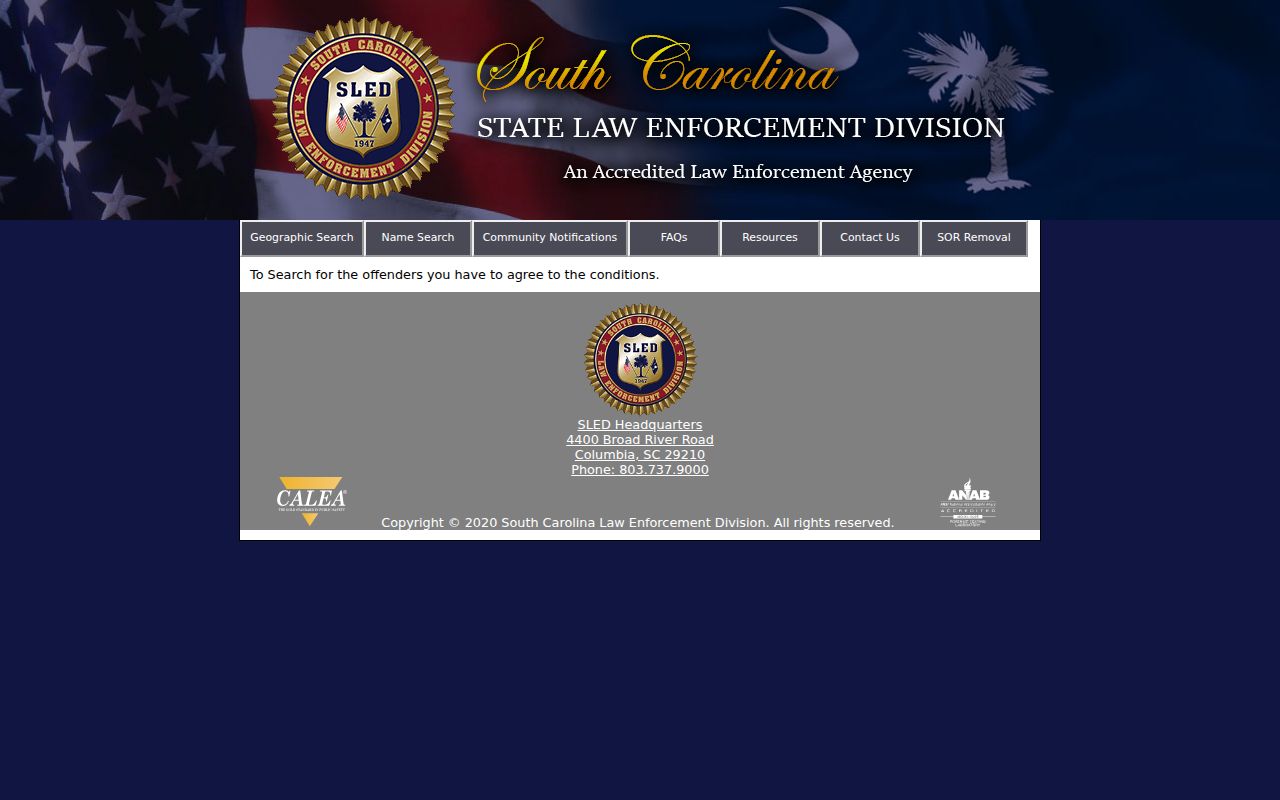
Those conditions reinforce why Marion County registry facts should be verified through official contacts when a public field appears stale or inconsistent.
Lawful Use and Community Notification
The registry exists for public awareness and safety planning. Use a Marion County result to understand the official public notice, compare identifiers, review the residence map with care, and decide whether a fact needs confirmation. Do not contact, follow, expose, threaten, or harass a registrant or members of the household. Do not treat a map point as permission for vigilantism.
South Carolina Code Section 23-3-510 adds punishment when registry information is used to commit another crime. A misdemeanor maximum can rise by $1,000 and six months, while a felony maximum prison term can rise by five years. The South Carolina registry statute chapter provides the controlling text.
Registry misuse is a crime: Do not use Marion County registry information to harass, threaten, intimidate, or commit any offense. Section 23-3-510 authorizes enhanced penalties.