
How to Check Criminal History in Marion County
No one database contains every Marion County criminal record. Start with the South Carolina Judicial Branch Case Records Search for filed court cases. Use the county detention listing for a new booking, the correct police agency for an incident report, and SLED CATCH for the state repository view. Keep the full name, birth date, possible aliases, city, approximate event date, and any case or incident number close at hand. Each detail helps separate people who share a name.
The county Public Index may lag a fresh clerk entry, and Marion, Mullins, Nichols, and Sellers municipal courts do not appear on the current participating-court list. A blank result must be checked against those gaps. The sound sequence is:
- Search the Judicial Branch Public Index and choose Marion County.
- Call the relevant municipal court if the matter arose within a city.
- Check the official current-inmates and releases page for a recent custody event.
- Use CATCH when the question concerns the South Carolina repository record.
- Ask the record-holding office for a copy or written FOIA response when online tools fall short.
These steps answer distinct questions. Compare the identity data and final disposition before relying on a result.
Four Marion County Criminal Record Trails
A Marion County arrest can produce an agency report, a detention-center booking, a court case, and a fingerprint-supported SLED entry. The police narrative describes the event and the officer’s action. The booking file shows custody, intake charges, bond, holds, and release. The court file records what the prosecutor filed and how the judge resolved it. CATCH compiles items submitted to the state repository. Those four trails can carry different numbers, dates, or charge wording without any one of them being false.
| Record trail | Marion County source | Best answer |
|---|---|---|
| Incident or arrest report | Arresting sheriff or city police agency | What the agency documented |
| Booking and release | Marion County Detention Center | Local custody and intake status |
| Criminal case | Clerk, summary court, or municipal court | Filed charge, docket, and outcome |
| State history | SLED CJIS through CATCH | Submitted statewide criminal history |
This split is why one search is rarely enough. A reader tracing a Marion County case should follow the record from its creator to its final custodian.
Official South Carolina Background Checks
The South Carolina Law Enforcement Division Criminal Justice Information Services unit runs SLED CATCH. A public guest may order a name-based South Carolina report for $25. The dated July 1, 2026 notice adds a $1.43 processor charge, though an older fee sentence remains on the portal. Check the amount shown at payment. CATCH searches the state repository. It is not a national record, wanted-person search, court docket, or sex offender check.
The official CATCH start screen shows the fee notice and access terms. View that source before ordering a Marion County criminal-history report.
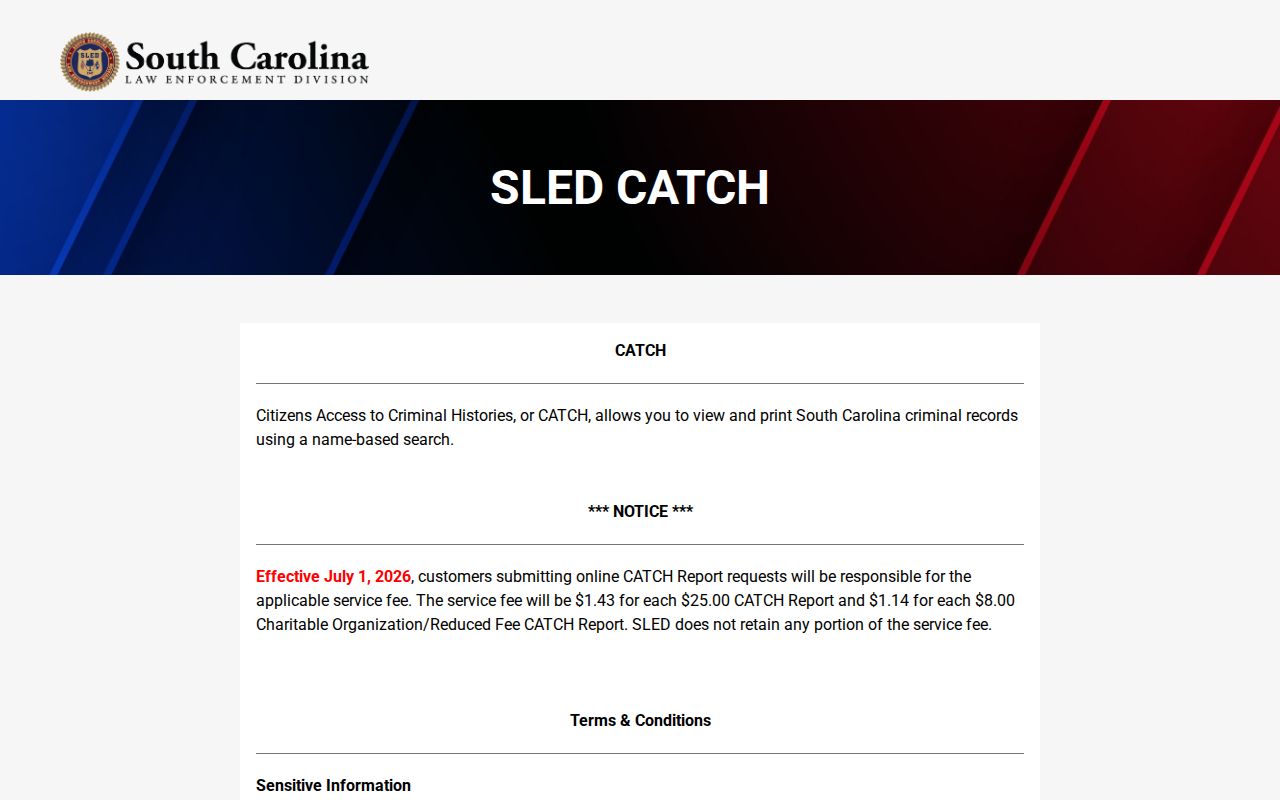
The screen makes clear that payment buys a repository search, not a guarantee that every local court or booking event is present.
Mail avoids the online processor charge. Send the SLED criminal-record-check form, proper payment, a self-addressed stamped envelope, and any certification request to SLED Records Department, PO Box 21398, Columbia, SC 29221-1398. Mail payment may be a business check, certified check, cashier’s check, or money order, but not cash or a personal check. Public Dissemination help is available at 803-896-1443, Monday through Friday from 9 a.m. to 4:30 p.m., or SLEDCATCHAcct@sled.sc.gov. SLED does not advertise a general fingerprint-based public report through IdentoGO; the FBI self-review route below is the verified fingerprint channel for one’s own federal history.
CATCH can also be reached as a guest or account user. The official user-type screen shows those entry paths.
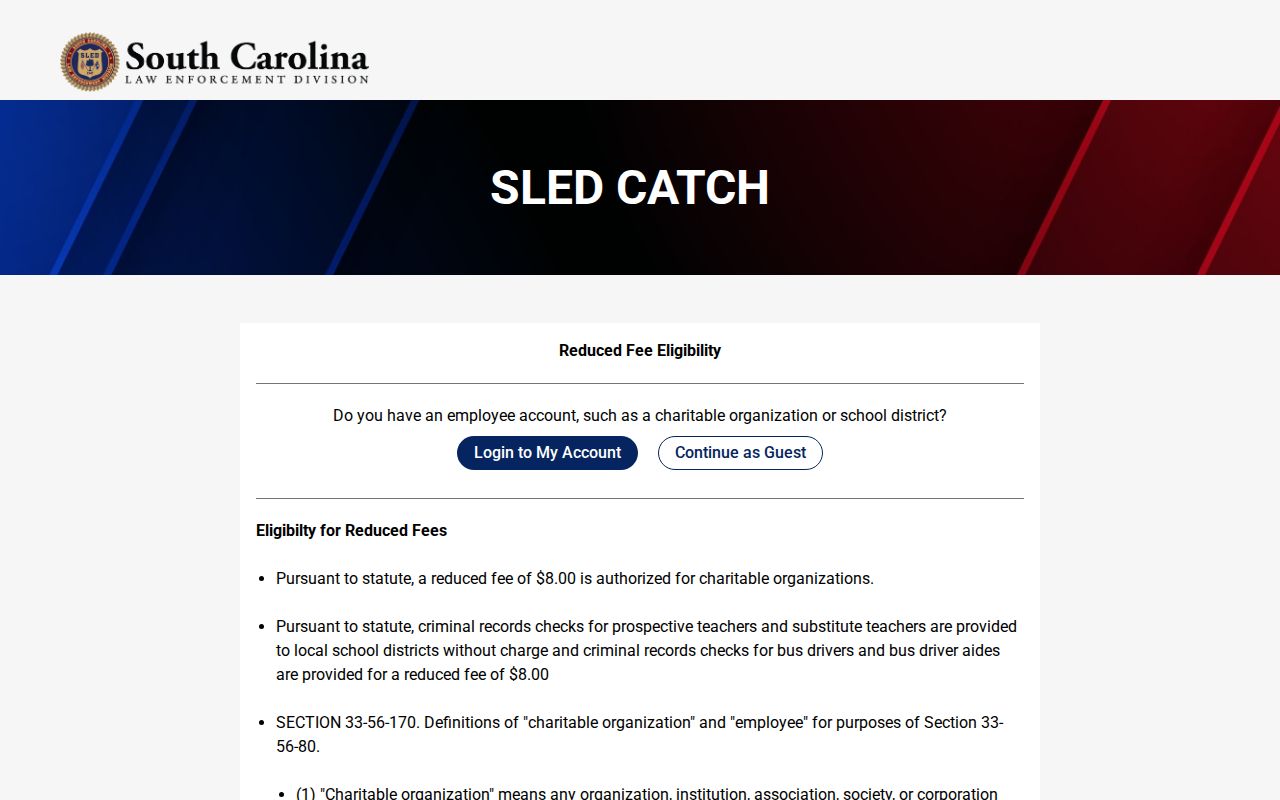
For self-review of federal identity history, the FBI requires fingerprints rather than a name-only search.
Search Marion County Records in CATCH
CATCH uses identifying data to search reports submitted to SLED. Exact spelling matters. A changed name, alias, or incorrect birth date can lead to a false match or missed record. Social Security number entry is optional and should be handled with care. The verified fields are limited to those exposed by the official portal.
| Field | Type | Required | Search note |
|---|---|---|---|
| Last Name | Text | Yes | Starts-with matching is described |
| First Name | Text | Yes | Starts-with matching is described |
| Date of Birth | Date or text | Yes | Use the subject’s correct birth date |
| Social Security Number | Text | No | It is searched if supplied |
A result can be viewed and printed. Multiple possible subjects may require special processing. Correct a disputed record at the arresting agency or court that supplied the source fact, then follow the SLED process.
Types of Criminal Records
Marion County offices create records for different points in the justice process. An incident report is held by the agency that wrote it, not by every law enforcement office. Booking data belongs to the detention center. The Clerk of Court maintains General Sessions filings, while summary and municipal courts keep matters within their jurisdiction. SCDPPPS holds supervision files, SCDC covers sentenced state prisoners, and SLED maintains the statewide criminal-history repository and SORT registry.
- Arrest and booking records: agency facts, intake charges, bond, holds, and custody dates.
- Criminal court case files: charging papers, docket events, pleas, rulings, disposition, and sentence.
- Repository records: fingerprint-supported arrest cycles and reported court outcomes compiled by SLED.
- Warrant records: court-issued process handled through the clerk, bond court, municipal court, and law enforcement.
- Custody and supervision records: county jail, state prison, probation, parole, and registry information.
The SCDC Inmate Search disclaimer illustrates how narrow one tool can be.
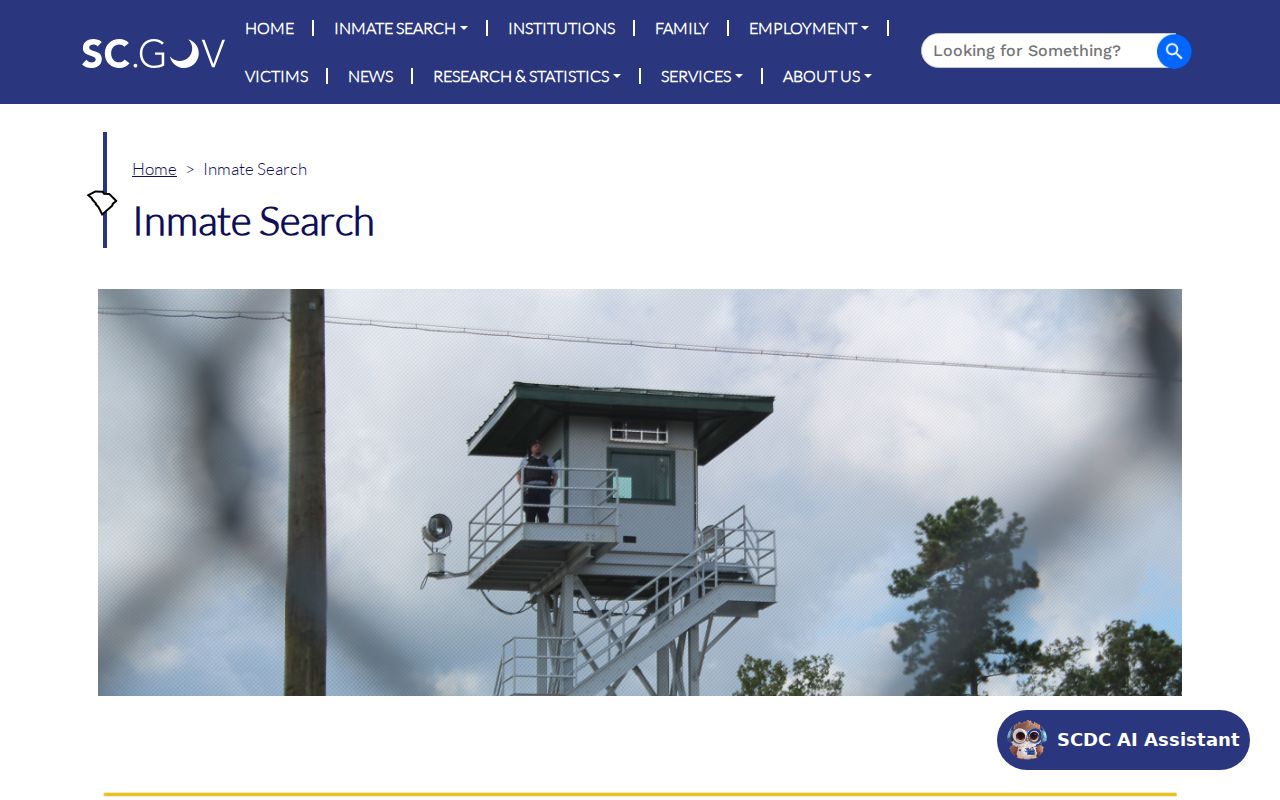
SCDC excludes county detainees, released people, probationers, parolees, juveniles, and fugitives from that public locator.
Marion County Sheriff Record Requests
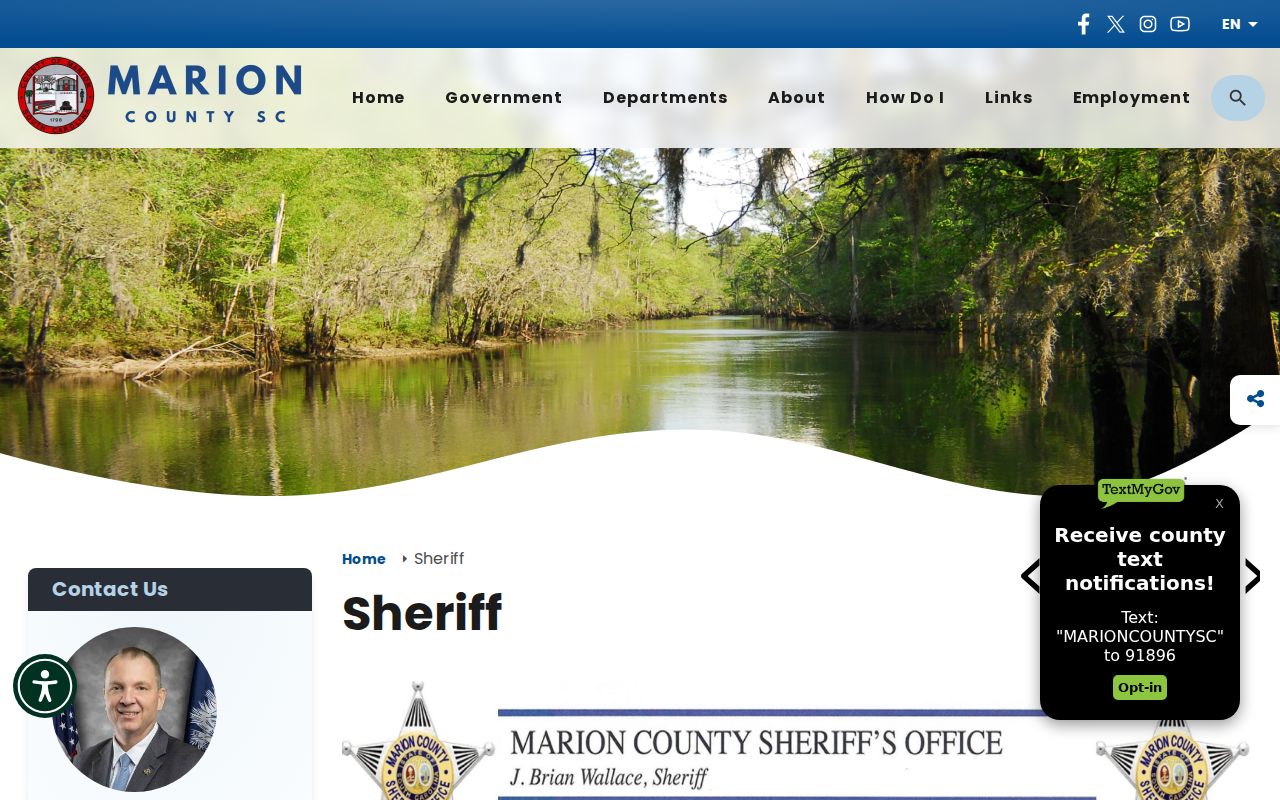
The Marion County Sheriff’s Office does not publish a stand-alone records portal or local background-check product. Its current headquarters is 1811 North Highway 501 Bypass in Marion, and the main number is 843-423-8216, option 2. The South Carolina Sheriffs’ Association identifies Deputy Rhiannon Herring as the Records/TAC contact. Call first to learn whether the sheriff holds the requested report. City police reports remain with the city agency.
The official sheriff page confirms the department contact and functions.
When a trackable written request is needed, use the County FOIA channel at 2523 East Highway 76, by mail to PO Box 183, Marion, SC 29571, by fax at 843-275-6127, or in person. The county lists 843-423-3904 for help.
The Marion County FOIA page publishes the request and fee rules.
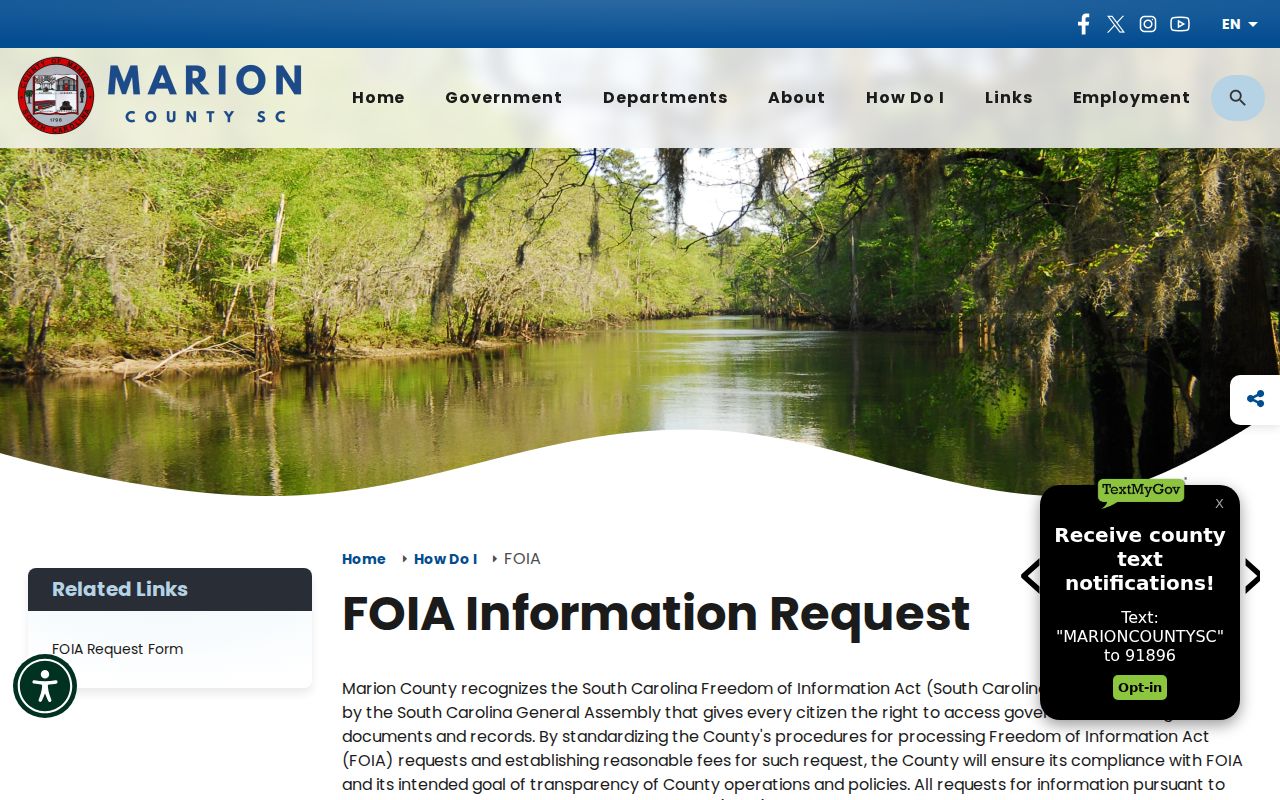
Describe the incident, date range, agency, location, known number, record type, and desired format. Ask for nonexempt parts to be released after redaction.
What a Marion County Criminal Record Shows
The fields depend on which Marion County record is open. A SLED history centers on identity and submitted arrest cycles. A case file centers on the court number and judicial outcome. A booking file centers on admission, holds, bond, screening, and release. Read the source label before comparing facts, since an intake charge can change before prosecution.
| Name and identifiers | Reported name, aliases, birth data, and an agency or state identifier where present. |
|---|---|
| Arrest and booking | Arrest authority, intake date, listed charges, bond, holds, and release facts. |
| Charges and statutes | Alleged offense wording and the cited South Carolina law as filed at that stage. |
| Disposition | Pending, dismissed, acquitted, convicted, nolle prosequi, or another recorded result. |
| Sentence | Court-ordered custody, probation, financial obligations, or program terms after conviction. |
| Custody or supervision | Jail or prison status differs from probation, parole, and other community supervision. |
Only the court file explains the judicial outcome. Booking proves a custody event, while CATCH reflects what reporting agencies supplied to SLED. A few docket terms help connect those sources:
- Disposition
- The recorded result or current status of a filed charge.
- Nolle prosequi
- A prosecutor’s formal choice not to continue the charge at that time.
- Bond
- Security and conditions governing release while the case remains pending.
- Detainer
- A notice that can prevent release while another agency or legal authority acts.
Marion County Warrant Search Fallbacks
No official public Marion County active-warrant list or statewide e-warrant portal was verified. Begin with the Public Index for a linked case. Then call the Clerk at 843-423-8240, Bond or Summary Court at 843-292-5238, or the proper municipal court. Sheriff headquarters can be reached at 843-423-8216. A narrow County FOIA request may help with public sheriff-held information, but new, sealed, juvenile, NCIC, and investigative details can remain unavailable.
A bench warrant often follows a missed appearance or court order, but only the issuing court can confirm the reason and current status. Do not send money to an unsolicited caller. Ask the court or counsel for safe instructions on surrender, bond, payment, or a hearing. A stale web entry may lag a cleared warrant.
Marion County Criminal Record Context
The 2024 Crime in South Carolina report places Marion County’s violent-crime rate at 87.07 per 10,000 residents, among the five highest county rates in that edition. The rate describes reported events in a defined year. It does not show whether a named person has a record, how any case ended, or what is currently held by the jail.
Statewide violent crime fell 8.4 percent from 2023 to 2024, but the report also warns about reporting completeness. Only 204 of 288 active agencies submitted all twelve months. That caveat matters when using public crime figures as context. A case search, agency report, and SLED history remain the right sources for an individual event. Do not infer a personal criminal history from a county rate or neighborhood statistic.
Public Access Laws
South Carolina law favors access to nonexempt public records, but it also shields active investigations, protected identity data, juveniles, sealed cases, confidential sources, and safety-sensitive facts. Marion County may redact exempt parts and release the rest. Purpose-built tools such as the Public Index, CATCH, SORT, and jail list should be used before a broad FOIA request.
Key South Carolina statutes:
Title 30, Chapter 4 governs inspection, copies, reasonable production costs, deposits, exemptions, and redaction under the South Carolina Freedom of Information Act.
Sections 23-3-110 through 23-3-130 establish SLED’s criminal-information system and reporting authority.
Section 17-1-40 controls destruction or sealing of qualifying nonconviction arrest and booking records.
Sections 22-5-910 through 22-5-930 create several South Carolina expungement paths.
County FOIA fees include $0.20 per copied page and $5 for a USB device. Search, retrieval, and redaction use the hourly rate of the lowest-paid qualified employee. A 25 percent deposit may be required, especially for work estimated at three or more staff hours.
Marion County Custody Record Layers
The official Marion County current-inmates and releases page covers the detention center, while SCDC covers current state-prison custody. SC VINE adds custody and release notifications, not a full court or supervision record. Federal custody uses the Bureau of Prisons locator. A person marked released by one system may still be held or supervised elsewhere.
The BOP Inmate Locator provides the federal layer for records from 1982 forward.
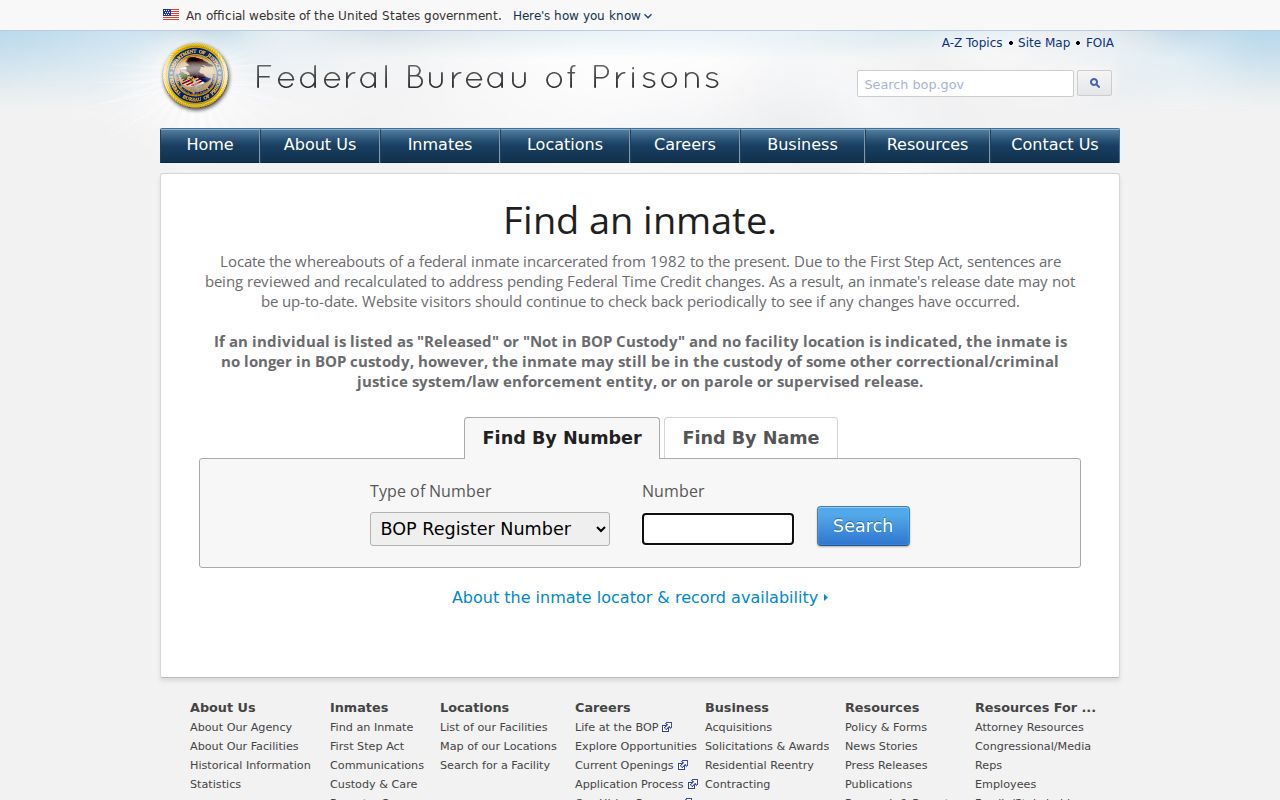
It accepts a BOP, DCDC, FBI, or INS number, or a name with optional middle name, race, age, and sex.
The Marion County detention center sits near Mullins, while the Clerk works from Marion. That physical split mirrors the records split: custody data can appear before the court docket, and release can follow extra warrant checks or state paperwork. Use the jail for present custody, then the court for the final case result.
Sealed, Expunged & Restricted
South Carolina uses the term expungement. A person usually begins with the circuit solicitor for the county of arrest. A dismissed Magistrate or Municipal Court charge starts with that court. The court order creates the authority; SLED does not grant relief on its own. After SLED receives an Order for Destruction of Arrest Records, it advises waiting four weeks and then buying a new CATCH report to verify the change because no automatic confirmation is sent.
Eligibility turns on the exact charge, result, prior record, and waiting period. Sections 22-5-910 through 22-5-930 include routes for certain low-level, youthful-offender, drug, and domestic-violence matters, with exclusions. Section 17-1-40 addresses qualifying dismissals, discharges, and not-guilty results. Limited sealed copies may remain for official purposes. Juvenile files, victim information, protected identifiers, and investigative material also face access limits.
For a Marion County case, confirm the disposition with the Clerk, then contact the Twelfth Judicial Circuit Solicitor or issuing lower court. Do not rely on an unverified old fee quote.
Marion County Supervision Records
Probation and parole are state-run through the South Carolina Department of Probation, Parole and Pardon Services. The Marion County SCDPPPS office page is the official local contact.
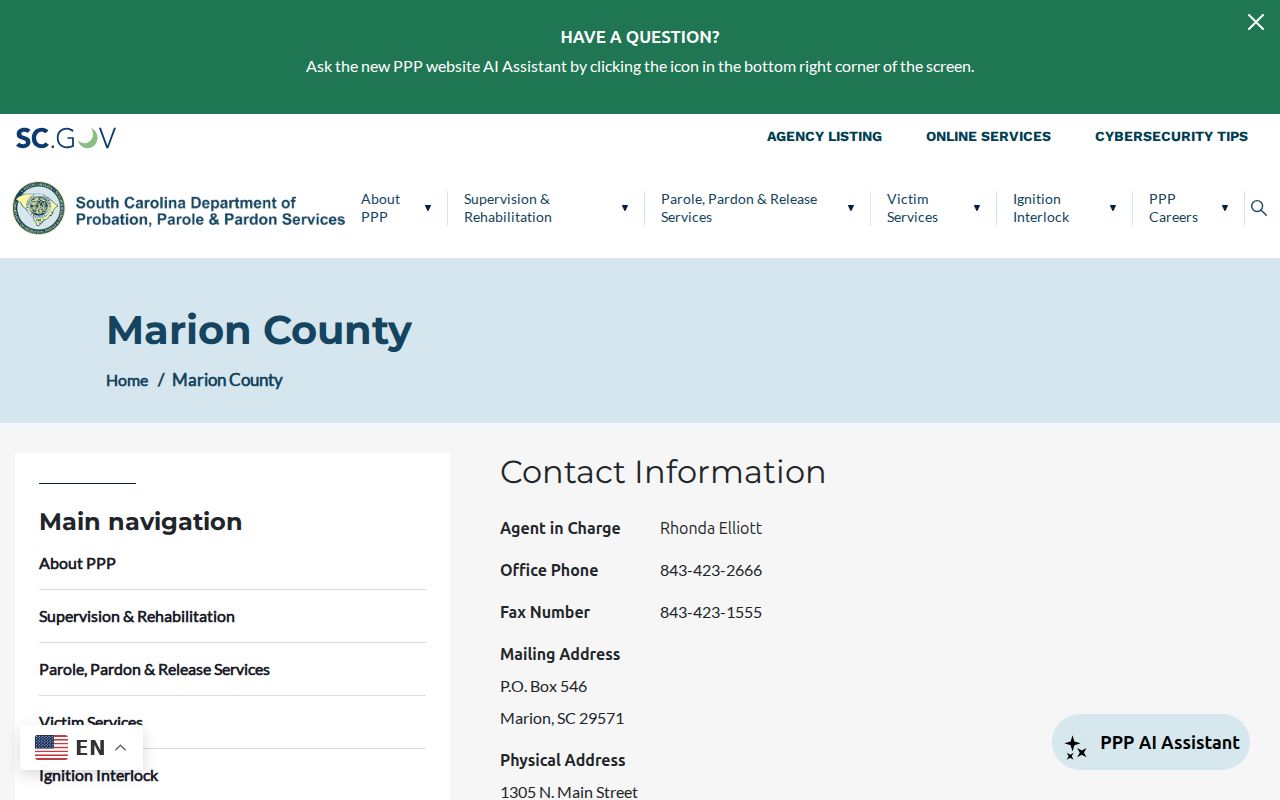
The office is at 1305 North Main Street in Marion, with phone 843-423-2666. Its July 28, 2026 snapshot listed 122 probation cases, 11 parole cases, 8 community-supervision cases, 6 supervised-reentry cases, and 6 Jessie’s Law Tracking cases. These figures change and must be read with their date.
No public online probation lookup was verified. Read the court docket for the sentence or probation order, then contact SCDPPPS for the agency channel. SCDC does not include community supervision, and VINE is not a complete supervision file.
Federal Criminal Record Self-Review
The FBI Identity History Summary is the federal self-review route. It requires fingerprints and carries an $18 FBI fee, plus any provider charge. A person may use the electronic Departmental Order portal, mail, or an approved Channeler. The FBI does not offer a name-only Identity History Summary and does not expedite the service.
The FBI electronic Departmental Order portal starts that process.
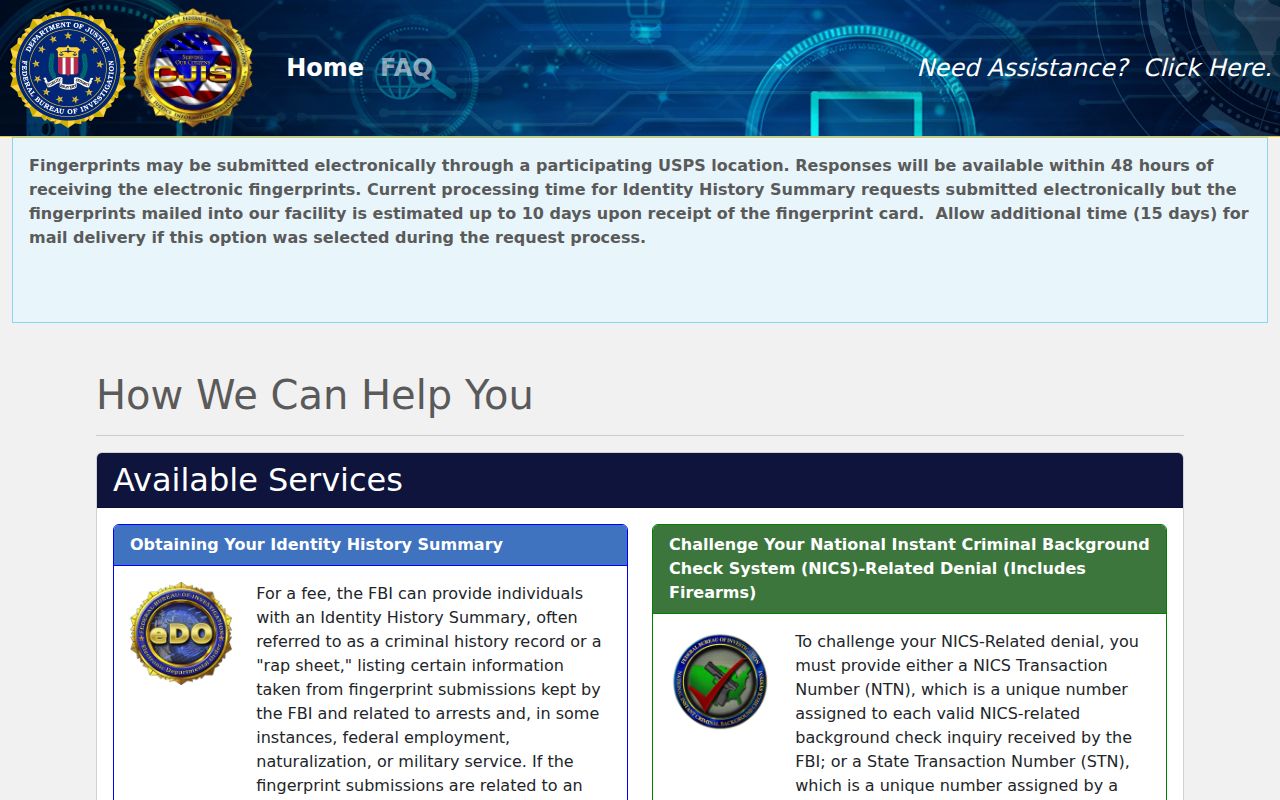
Challenges are free, and the FBI reports an average challenge time within 45 days. Correct the source agency or court first when the disputed fact came from Marion County.
Federal criminal cases for Marion County fall in the Florence jury area. The Florence federal courthouse page identifies the court serving the area.
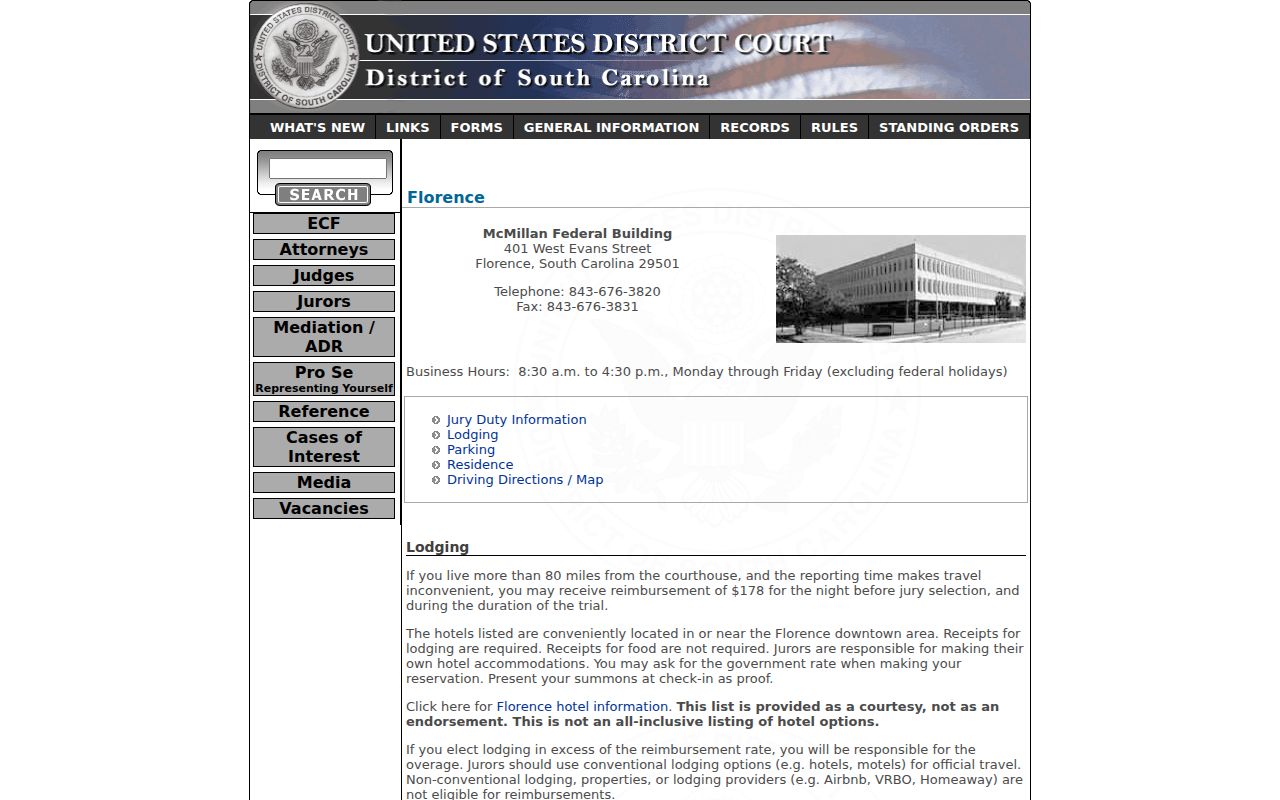
PACER holds federal dockets, while the county Public Index covers South Carolina trial courts. Keep those jurisdictions separate.
Criminal Records by City in Marion County
City police departments create their own incident and arrest reports, and municipal courts keep their own case records. The three largest incorporated places by the consistent 2020 Census count are Marion, Mullins, and Nichols. Each local trail can lead to Marion County Detention Center or General Sessions, but it starts with a different city office.
Marion Criminal History
Population 6,448 · Police reports and Municipal Court share the South Main public-safety location.
Mullins Criminal History
Population 4,026 · City records sit near the county detention and bond-court corridor.
Nichols Criminal History
Population 234 · Direct police and court contact fills the gap left by no city case search.